



-

Foreign alcohol—to bring something new and novel back to old friends—so they can taste the transitory experiences your words fail to repaint.
Clothes—each hole a bit of wear-and-tear that proves it was not a distant dream. It was real. You were a part of it. The smell of highland smoke, the ocean, guacamole, the perfume of a fleeting romance—still lingering in the fibers.
Crafts from the market—great ideas at the time, when you bargained for them with foreign currency. You’ll hang some on your wall and wonder at some, “Why the hell did I buy this?” Imagine one day showing them to your growing kids, hopeful to inspire them to see the world as you saw it—attainable, your own, open and available. (more…)
-

I just giggled a little. Not an awww, that’s-so-cute giggle, but more of a, that’s-a-little-ridiculous giggle. I’ll tell you why. During my morning routine — wake up, coffee, spin through the local and national papers, twitter, TheExpeditioner, coffee, Facebook, coffee, dabble about the day’s travel writing — I found a photo essay which was the source of my giggles.
I headed over to concierge.com and found a quality set of pictures from the unspoiled reaches of Asia. Those incredible places you still may have all to yourself, if for only a little while longer. Not giggle-worthy, yet, I know. Then I began reading something along the lines of, “You can explore picturesque fishing villages, revel in unspoiled scenery, and participate in local customs without being elbowed out of the way by photo-snapping hordes.” It’s a photo essay, people. Do you see what I mean?
Snarkiness aside, this is another great example of those places you don’t want to delay in visiting if you have the chance. My favorite of the destinations they chose, which include lodging and travel tips to each, would be Kuching, Borneo. The capitol city is described as a “Singapore without the neon signs and high-rises,” and if you’re there in mid-summer, head over to the World Rainforest Music Festival.
So if you see any elbow-throwing, full-contact photography from the hordes, I suggest you take a picture of that. Get it?
-

Let’s face it, “Lawrence of Arabia” is one of the best travel movies of all time. I dare you to watch this flick (and, yes, that means you’re going to have to put aside about 3 1/2 hours) and not want to pack your bags and follow in the famed footsteps of T.E. Lawrence (except, perhaps, that part when those footsteps enter that Turkish prison).
Today, that trip would entail traveling from the northern reaches of Syria to the southernmost portion of Jordan, where the country meets the Red Sea in Aqaba. Just outside of the famed city on the sea, in southern Jordan, is Wadi Rumm, or the Valley of the Moon, a swatch of land towered over by sandstone and granite outcrops, akin to Monument Valley, but, you know, not even close.
It is here that The Australian recently visited, taking in the vastness of the region, sleeping under the stars in the surprisingly cold night air, and bumping into local Bedouin nomads, a people whose hospitality is unmatched in the world — even with interloping Aussies who stumble upon random tents in the desert. (more…)
-
French traveler and budding filmmaker, Romain Corraze, at age 23, graduated school, packed up his bags, and headed out into the world for a year. During his trip, he ended up visiting over 31 countries in six different continents (everyone forgets to stop in Antarctica), and, like any true romantic (I bet this guy gets all the girls), he shot video of sunsets from all around the world, resulting in the above video.
These solar events come from 18 of those countries, including: U.S.A., India, Cambodia, Colombia, China, Russia, Thailand, Argentina, Chile, Mongolia, Nicaragua, Mexico, Hong Kong, Australia, Vietnam, Guatemala, Belgium, and France. Of these, I have to say, my favorite comes at 1:57, which takes place in Angkor, Cambodia.
You can see Romain’s other videos at his Vimeo page or at his blog, romain-world-tour.com.
-

South Korea, my Asian home away from home where I experienced my first living abroad experiment, is an anomaly of sorts, really. There are aspects of the culture I will never comprehend, nor should I. There are things in which I tilt my head in confusion, which is fine. There are things I embrace and wish the world would adopt, which it should.
Perhaps encapsulating all three of these at once, I read a recent article at The New Zealand Herald that sent me spiraling back to my first days in the “Land of the Morning Calm.” The article is titled, “A warm welcome without words,” and it couldn’t be more accurate.
Those that have spent any time in Korea know that it takes a little while for the locals to achieve a comfort and confidence level to put themselves out on a limb using their English. Let’s be perfectly honest about a couple things. One: Because of my one year of teaching elementary English in the rice farming community of Yeoju, the entire population of town is totally and completely fluent. I can’t speak for the rest of the country, though. Two: The Korean language is not quite yet a global dialect. (more…)
-

The only problem with mass public transit is the immediacy of arrival. Although I find trains romantic, planes quick and comfortable, buses affordable, you do see a lot more when you travel by car.
Such was Jon Faine’s experience on his road trip. He and his son, Jack, made a six-month-long journey from Melbourne to London, allowing them to encounter unique experiences on the roads less traveled. In an edited excerpt from his upcoming book in the The Sydney Morning Herald, he explains an up-close look at the difficulties in China. One of them was just getting in:
I tell Jack to sit up in his seat, to turn off the music, to take his feet off the dashboard and put his shoes on. I am nervous and half expecting to be told to go away. Several travellers have warned us about Chinese border checks, seizure of guidebooks and laptops, satellite phones being confiscated and eternal searches for contraband or politically sensitive materials. I am prepared for an argument, determined not to lose any of our gear.
A foreigner driving through Chinese borders is not common practice and usually discouraged by most travel guides. Still, Faine found a way in via a tip by a local guide: China caters to groups from Europe traveling east to west. Faine threw them for a loophole: “I cheekily suggested that we could be a group if that was required - a group of one. The reply came through that my joke satisfied the bureaucrats.” (more…)
-

Ahh, isn’t alliteration so fun? Remember that most famous of “No Reservations” — the one where Tony and crew get caught in the crosshairs of a little squabble between Lebanon and Israel back in the summer of 2006, in what turned out to be the beginning of the 2006 Israel-Hezbollah War, and what also turned out to be one of the series’ most infamous episodes (and the one, in my humble opinion, with some of the best writing we’ve seen on the show, including this great send-off we discussed a little way back).
Four years have past, bygones have become bygones (as they tend to do, every notice that?), and “No Reservations” has returned to Beirut for this latest season. Tony recently sat down with CNN and discussed his feelings on returning to the city, where he went, and, most importanly, what he ate.
First order of business, we went back to Le Chef. We made a point of going back with the exact same camera crew and producer, who were stuck with me in 2006. And we met with largely the same people, even went to the places we didn’t get the opportunity to visit last time, and we met with people from the previous episode.
Met with Kamal [Mouzawak], the guy who runs Souk el Tayeb [Beirut’s first farmer’s market], went to the restaurant that showcases regional produce and specialties [Tawlet]. We had a meal at his [Kamal’s] house. Ate seafood along the coast, falafel at a famous place run by two brothers who don’t talk to one another [Falafel Sahyoun].
Had sfiha [meat pies] near Baalbeck, went to a vineyard where they make traditional arak [a clear, aniseed flavored alcoholic beverage] and wine. Try to eat around high and low. Had traditional Armenian food at a restaurant in the Armenian district.
-

Frequent flyers are lately becoming frequently frustrated, being frequently denied, and are frequently failing to redeem their miles for the tickets that they want at the airline’s base redemption rates.
With many airlines posting negative profits, the neighborhood kid selling lemonade is finding more financial success in business than airlines worth billions. This is causing them to make cuts everywhere. First, they took olives from our salads. Then, they took our salads. Then, they took our free alcohol (bastards!). Now, not even our miles are sacred.
Based on observing young children, the normal human reaction when something is taken away is to throw a tantrum. But, what smart kids learn to do, instead, is to wait until their parents are not paying attention and they take their toys back.
How this translates into reward travel is knowing which airlines treat their frequent flyers the best, knowing how the industry awards FF-travel, and then using that information to get the most out of your miles. By doing that you have the best chance of getting that cramped seat next to an obese, screaming infant for free.
Here are four tips all frequent flyers must know. Then you will be a master of the falling, free skies. (more…)
-

It’s probably safe to say that if you really want to get to know a city, stay away from where the scenic beaches and high-rise hotels are located. Far from the pulse of the city, these upscale, over-developed, tourist-friendly locales not only attract the crowds of tourists you’re likely trying to avoid in the first place, but also house the bland restaurants and petty criminals that are attracted to this vulnerable crowd.
Instead, look for the neighborhoods with the street vendors, with the businesses where the owners sit out front chatting with neighbors, with the restaurants that don’t even bother putting their name out front. Here’s is where you’re going to find the “real” city, not to mention a better time.
And, like many other places around the world, this is also true for Recife, Brazil, the country’s fourth-largest city, and home to one of the region’s most visited beaches, Boa Viagem beach in the tony neighborhood of Boa Viagem. But, as Travelmag points out in a recent trip to the city, a trip to Boa Viagem isn’t really Recife. In fact, “Boa Viagem could be almost anywhere in Brazil, or even Florida [gasp!].” Instead, they suggest heading downtown, an area once flush with money during its colonial heyday as a major exporter of sugar. Of course, that was several hundred years ago, and things have changed. (more…)
-
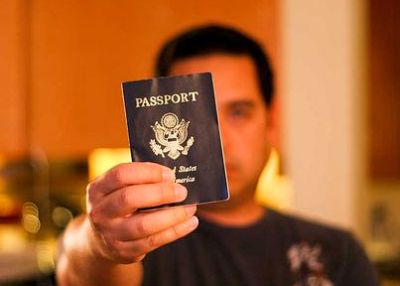
You, the intrepid traveler, insider to all things travel and keen to the newest travel trends, were already smart enough to turn in your application before July 13, 2010, thus beating the clock on the recently implemented $35 increase in processing fees for renewing your passport. Huh, missed the news on that fee hike? What’s that? It was the fault of the travel bloggers who you follow daily to warn you about these things, and they, like Jimmy Carter and “Lost” after season 3, utterly and completely failed you?
It is true, but unlike the famous peanut farmer and J.J. Abrams, I take full and complete responsibility for this one, and wish to make amends by at least giving you some helpful information about that most infuriating aspect of international travel that is the passport.
Turns out a lot of people did know about the rate hike, including many first-time passport applicants (new passports now cost $135; it’s $110 to renew), and they, like a Shamrock Shake enthusiast, rushed out to take advantage of this quickly closing window. This, in turn, has caused a massive backup in the not-that-speedy-in-the-first-place processing office of the State Department. In response, they recently issued a warning stating that you can forget about getting your passport in 30 days, and the turnaround time to receive your document will now be a full six weeks, no exceptions, unless, of course, you pay extra.
And don’t think this doesn’t effect other travelers as well. Need to add extra pages or make a change to your passport? Then you’re going to have to get in line with everyone else too. So plan ahead, get your forms filled out and mailed, and please, whatever you do, don’t say I didn’t warn you. Better late than never.
-

If you love Paris but despise the crowds, then August may be the perfect time to travel to The City of Light. Yes, it’s true that many restaurants, businesses, and cafés shut down during this month, but with half of Parisians leaving the city for annual vacations, you may just enjoy the extra leg room. “In August, a sense of serenity settles over the city,” recalls James Morgan in the recent National Geographic Traveler. Surprisingly, there is still much to see, eat, and admire in a quieter Paris, and you may even find that escaping the pressures of completing a “must-see” list is quite liberating.
Instead you can appreciate the city with a simpler, more Parisian saunter, enjoying the many parks, Sunday museums, flea markets, and breezy cafés. Morgan advises — as is usually always a good bet — venturing off the tourist track, suggesting a stop at the Pére Lachaise cemetery where visitors should avoid the crowded resting place of Jim Morrison, purchase a map for two euro, and search for other “evocative antiques” like, Honoré de Balzac, Frédéric Chopic, Eugéne Delacroix, Georges Bizet, Sarah Bernhardt, and Colette.
If one opts for a cruise up the Marne and Seine, Morgan recommends grabbing lunch at a guinguette, or French “eating-drinking-dancing joint,” hotspots for many free-spirited Parisians during the 18th century to the 1950′s. Located just east of Paris in the town of Marne, the guinguettes were an inexpensive (they were exempt from the city’s liquor tax) way for the working class to wind down on Sunday afternoons. (more…)
-

Lusting to dive into the world of teaching English to speakers of other languages at home or abroad? Here are a few tips for the curious.
By Lillian Marshall
I was an English teacher in Boston for six years, and one summer my colleague lured me down to Costa Rica for an intensive, month-long TEFL (Teaching English as a Foreign Language) course. We were stunned by how hard we worked during that month, but now we agree: that TEFL course was the best teacher education we’ve had in our lives.
When I returned to the classroom in Boston, the techniques I had learned in Costa Rica were solid gold. In August of 2009, I flew out of America to travel around our world for nine straight months, and again busted out my TEFL skills while teaching in a youth center in Ghana.
Upon returning to dear Boston this year, I was rapidly able to acquire a full-time job teaching ESL at a language school, thanks to my certification and experience . . . and I’ve been happily teaching there ever since.
So allow me to unload the picnic of advice from my basket for you to consume.
1) Teaching ESL Is A Great Use Of Your Time
If you’re traveling, what better way is there to understand a new culture than to spend a delightful pack of hours a day chatting with locals? If you’re at home and longing to leave, what more effective method is there of glimpsing what’s out there than forming deep connections with an international crowd? Teaching ESL rocks. (more…)
-

Meet Nguyen Thi Thanh, or better known in these parts as the “lunch lady.” Due to the relentless coverage of television (Bourdain visited her last year on No Reservations) and the blogosphere, Saigon’s own Nguyen Thi Thanh has become the David Chang of Ho Chi Minh, creating legions of foodie followers and elevating her little street corner stall to Momofuku-like stature with her rotating cast of soups, from Monday’s bun Thai to Sunday’s smorgasbord of bun thit nuong, bun nem nuong and bun cha gio. Today, a meal by the lunch lady is a required “to-do” for all visitors to Saigon.
Located near 23 Hoang Sa Street (down the alley on the right side), this little stall run by Thanh and her family is usually mobbed by patrons, and it is not unheard of for a line to form as she begins serving at 11:00 a.m. This is due to the fact that all her ingredients are bought fresh that morning from the market, and when she’s out of food she’s done for the day. As Gastronomy Blog reports (this is the blog that turned the world onto her), Thanh has kept her prices below 13,000 VND, despite rising costs, and refuses to raise them out of loyalty to the local workers who frequent her.
Eatdrinknbmerry.com was fortunate enough to visit Thanh on a Friday when she was serving up piping hot bowls of bun bo hue, made of a broth the color of “fiery red, a sign of dense chili sauce and probably annatto seeds,” and filled with beef and cha, or pork sausage patties. Topped off with congealed pork blood (huyet) and noodles, this soup has been known to make travelers, in just a matter of minutes, reconsider ever leaving. Something tells me, Thanh would be just fine with that.
 THE PHILIPPINES
Cheap Paris Hotels, Cheap London Hotels,
Cheap New York Hotels
 NEW YORK CITY
 SPAIN
SPAIN MEXICO
Online Hotel Reservations

Find and Book your Hotel!
- Hotels in Amsterdam
- Hotels in Venice
- Hotels in Rome
- Hotels in Paris
- How Many Days Can I Travel In [Insert Country Here] With $1,000?
- What's The Longest Nonstop Flight In The World?
- How Many Americans Have A Passport?
- What You Need To Know About Couchsurfing
- 7 Ways To Relive Andy Warhol's New York
- December’s “Christmas Around The World” Photo Contest Winner: A Ho Chi Minh City Santa Hat
- Travel To Afghanistan: The Next Frontier?
- Top 5 Spots For Street Food In Paris
- The Top 5 Rules For CouchSurfing
- An Insider's Guide To The Top 10 Destinations In Asia
- aesta1 on Wednesday, January 5, 2011 @ 2:19 am: What a beautiful story about your stay in the Philippines. Foreigners when they venture out of...
-
 Nina on Tuesday, January 4, 2011 @ 11:48 am: I need some good ukrainian travel magazines, could you please help me?
 - Dave on Monday, January 3, 2011 @ 10:25 am: Great article, and I LOVED the advice about putting the at-home relationship on hiatus before going...
- Dave on Monday, January 3, 2011 @ 10:07 am: Loving your blog. Just discovered it today, and this was a great one to start with. Even though...
-
 TheExpeditioner on Sunday, January 2, 2011 @ 4:32 pm: I only traveled through Barranquilla, but didn't have time to stop there, but next...
Asia/Pacific (27)
Europe (42)
North America (17)
South America (20)
season two
Southern Africa

Montreal

Dublin

season one
Colombia
Scandinavia
Argentina/Chile
ABC News
AU Sydney Morning Herald
AU The Australian
Boston Globe
CNN
Chicago Sun-Times
Chicago Tribune
Financial Times
JP The Japan Times
LA Times
MSNBC
Montreal Gazette
NZ The Herald
New York Daily News
New York Times
Newsday
St. Petersburg Times
San Francisco Chronicle
Toronto Star
The Travel Channel
UK The Guardian
UK The Independent
UK Telegraph
USA Today
Wall Street Journal
Washington Post
Yahoo Travel
ZA The Independent
AmericanWay
Budget Travel
Business Traveller
Condé Naste Traveller
Forbes Traveler
Hemispheres
National Geographic Traveler
Outside Magazine
Travel + Leisure
Smithsonian
BootsnAll
CheapOair Travel Blog
Concierge
Gadling
GoMad Nomad
GoNomad
Jaunted
Kathika
Literary Traveler
The Lost Girls
Matador Trips
Matador Television
On Our Own Path
Travelmag
TripFilms
Vagabondish
What's In Your Bag?
World Hum
YouTube Travel

Home | About Us | Submissions | Twitter
Copyright © 2025 The Expeditioner, LLC
The Expeditioner Network | The Expeditioner | What's In Your Bag?
